
Dental Articles - Waterdown
Braces or Invisalign: How to Choose
Posted by Panacea Dental on Sat, 08 Aug 2026
A practical comparison of fixed braces and Invisalign clear aligners: what each treats well, what it costs you in daily life, and how to decide.
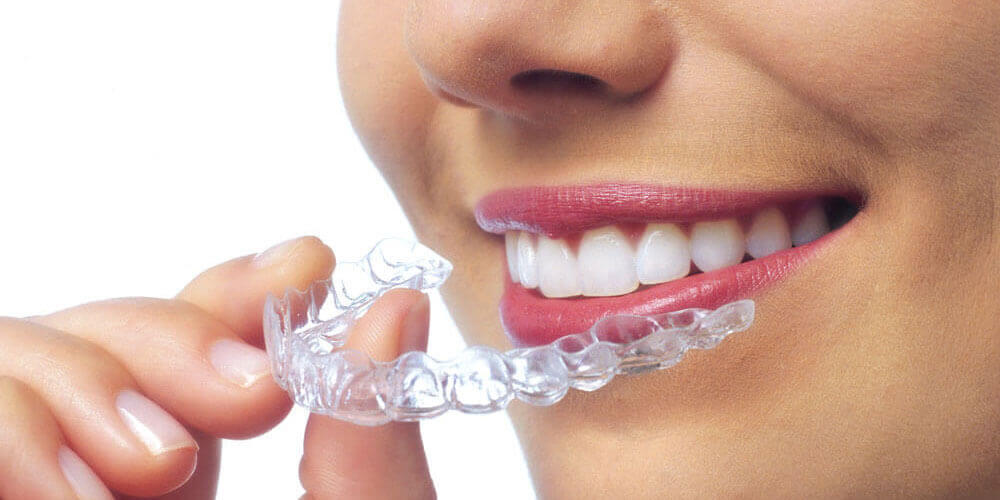
Braces or Invisalign, How to Choose
Both move teeth by applying gentle sustained pressure so the bone around the root remodels and the tooth shifts. The biology is identical. What differs is how the force is delivered, and that difference decides which suits a given case and a given person.
What each does well
Fixed braces use brackets bonded to the teeth and a wire threaded between them. Because the bracket grips the tooth from every direction, braces have very precise control over rotation and over moving a root rather than just tipping a crown. Complex cases, significant bite correction and teeth that need substantial vertical movement are usually handled more predictably with fixed appliances. They also do not depend on the patient at all, which matters more than people expect.
Invisalign uses a sequence of clear removable aligners, each one slightly different from the last. It handles crowding, spacing and mild to moderate correction very well. The aligners are close to invisible at conversational distance, and because they come out you brush and floss normally and eat whatever you like.
The honest trade-off
The advantage of Invisalign is that it is removable. The difficulty with Invisalign is also that it is removable.
Aligners need to be worn 20 to 22 hours a day. That means they come out to eat and to drink anything other than water, then go straight back in. If they sit in a pocket through a long lunch and an afternoon of coffee, the treatment stops progressing and the next aligner will not seat properly. Treatment then takes longer than quoted, and people reasonably feel it has not worked as promised.
Braces do not ask anything of you in that respect, because you cannot take them out. What they ask instead is cleaning discipline. Brackets and wires trap food and plaque, and decalcification around brackets leaves permanent white marks on the enamel that outlast the treatment. That is the failure mode with fixed appliances.
Which one for which situation
If your case is straightforward crowding or spacing and your working life makes visible brackets awkward, aligners are usually the better fit. If the bite needs significant correction, if teeth need rotating substantially, or if you already know you will not reliably keep something in for 22 hours a day, fixed braces will get you a better result.
For teenagers the calculation is often about the household as much as the teeth. Aligners are widely preferred socially, but they only work if worn, and that has to be an honest assessment rather than an optimistic one.
Retainers, which are not optional
Teeth have a memory. The fibres around each root are elastic and they pull the tooth back towards where it started, most strongly in the first months after treatment but to some degree indefinitely. This applies equally to braces and aligners.
Retainers are what hold the result. Skipping them is the single most common reason people who had orthodontic treatment as teenagers have crowded teeth again in their thirties. Whichever route you take, budget for retention as part of the treatment rather than as an afterthought.
Before either can start
Moving teeth through inflamed gum or around active decay causes harm. Any untreated decay and any gum disease is dealt with first. This is not a delay tactic. Orthodontic force applied to teeth with reduced bone support can accelerate the loss.
Treatment is provided by our general dentists. An assessment is the only way to know which option genuinely suits your case.
Panacea Dental is at 105 Clappison Ave #103 in Waterdown, open Monday to Friday from 10:00 am to 7:00 pm and Saturday from 10:00 am to 3:00 pm. We are accepting new patients. Call 289-408-5100 or book online.