
Dental Articles - Waterdown
Dental Care for Patients with Special Needs
Posted by Panacea Dental on Sat, 06 Sep 2026
Sensory sensitivity, communication, mobility and medication all change how a dental visit should be planned. What to tell us in advance, and why it helps.
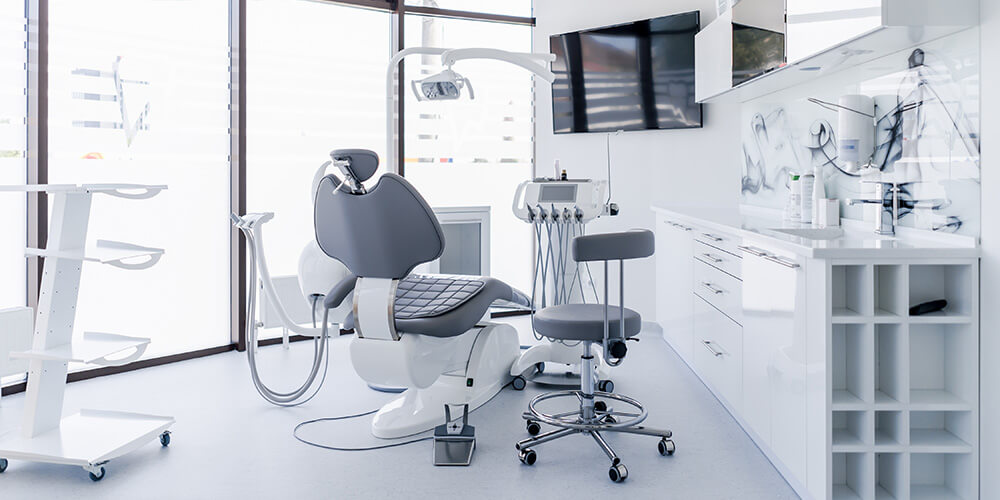
Dental Care for Patients with Special Needs
A dental appointment asks a lot of a person. Lie back, stay still, keep your mouth open, tolerate bright light and unfamiliar sounds, and let a stranger work in the most sensitive part of your body while you cannot speak. For most people that is merely unpleasant. For someone with a sensory processing difference, a developmental disability, a movement disorder or a communication difference, it can be genuinely unmanageable if nothing is adapted.
Almost all of it can be adapted. What makes the difference is knowing in advance.
Why oral health is often worse, and why it is not anyone's fault
People with disabilities have measurably more dental disease, and the reasons are structural rather than behavioural.
Medication. A great many drugs used for epilepsy, psychiatric conditions, muscle spasticity and behavioural support reduce saliva. Saliva is the mouth's buffer against acid and its repair mechanism, so less of it means decay develops faster and in places it otherwise would not. Some anticonvulsants also cause gum overgrowth, which traps plaque and makes cleaning harder. Neither is a hygiene failure.
Texture-modified diets. Soft and pureed food clears from the teeth far more slowly than food that requires chewing, and anything taken frequently through the day keeps the mouth acidic for longer.
Physical difficulty with brushing. Limited grip, tremor, restricted shoulder movement or reliance on a carer all affect how thoroughly teeth actually get cleaned, regardless of intention.
Avoidance after a bad experience. One appointment that went badly can end dental attendance for years, and problems compound in that time.
Tell us before the appointment, not on arrival
This is the single most useful thing anyone can do, and it costs a phone call. When we know in advance we can schedule differently rather than improvise on the day.
Worth telling us: what tends to go wrong at appointments, what has worked elsewhere, whether there are sounds, lights or sensations that are particularly difficult, how the person communicates and whether they use a device or a carer to do so, any mobility or access needs, whether transfer from a wheelchair is needed, the full medication list, and whether there is a time of day that is reliably better.
Nothing on that list is unusual to hear. You will not be explaining something we find awkward.
What adapting an appointment actually looks like
A first visit with no treatment in it. Sitting in the room, seeing the chair, meeting the person who will be doing the work, and leaving. It sounds like a wasted appointment and it is the opposite: familiarity is what makes the second visit possible.
Time. Longer appointments so nothing is rushed, and treatment split across more visits rather than compressed into fewer.
A quieter slot. The start or end of a session means less noise, less waiting and fewer people.
Predictability. Explaining each step before it happens rather than during it, and agreeing a clear stop signal that is honoured immediately. Knowing you can halt things restores the control that lying back removes.
Sensory adjustments. Sunglasses for the overhead light, headphones or the person's own music for the handpiece noise, and bringing a familiar object.
The carer stays. Whoever normally supports the person is welcome to remain, and is usually the best interpreter of discomfort in someone who cannot easily say so.
When sedation is the right answer
For some people, no amount of adaptation makes treatment tolerable, and continuing to attempt it awake causes harm without achieving anything. Dental sedation exists for exactly that situation and choosing it is a clinical decision, not a concession.
It requires a full medical history review beforehand, because sedation interacts with a number of conditions and medications, and some complex cases are better referred to a hospital setting than treated in general practice. We would tell you if that applied. Our note on dental anxiety covers the options in more detail.
Prevention matters more here than anywhere
Where treatment is difficult, avoiding the need for it is worth a great deal. That usually means shorter intervals between cleanings rather than the standard six months, fluoride application, and practical help with daily cleaning: an electric brush with a large handle, a three-sided brush, or a second person doing a quick check after the person has brushed. Positioning matters too, and standing behind someone while supporting their head is often easier for both people than facing them.
If dry mouth from medication is part of the picture, it is worth raising with the prescribing physician, since an alternative sometimes exists. Our note on dental care as you get older covers dry mouth in more depth, and much of it applies at any age.
Cost should not be the barrier either. Many patients qualify under the Canadian Dental Care Plan, and our page on dental costs and fees explains predeterminations, which remove the guesswork before treatment starts.
Panacea Dental is at 105 Clappison Ave #103 in Waterdown, open Monday to Friday from 10:00 am to 7:00 pm and Saturday from 10:00 am to 3:00 pm. We are accepting new patients. Call 289-408-5100 or book online.